


 Cart
Cart
 sales@molnova.com



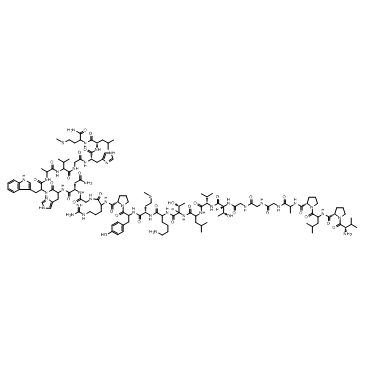
Gastrin-Releasing Peptide, human
CAS No. 93755-85-2
Gastrin-Releasing Peptide, human( —— )
Catalog No. M30024 CAS No. 93755-85-2
Gastrin-releasing peptide is a regulatory human peptide that elicits gastrin release and regulates gastric acid secretion and enteric motor function. The post-ganglionic fibers of the vagus nerve that innervate the G cells of the stomach release GRP, which stimulates the G cells to release gastrin.
Purity : >98% (HPLC)
 COA
Datasheet
HNMR
HPLC
MSDS
Handing Instructions
COA
Datasheet
HNMR
HPLC
MSDS
Handing Instructions
| Size | Price / USD | Stock | Quantity |
| 5MG | 462 | Get Quote |


|
| 100MG | Get Quote | Get Quote |
|
| 200MG | Get Quote | Get Quote |
|
| 500MG | Get Quote | Get Quote |
|
Biological Information
-
Product NameGastrin-Releasing Peptide, human
-
NoteResearch use only, not for human use.
-
Brief DescriptionGastrin-releasing peptide is a regulatory human peptide that elicits gastrin release and regulates gastric acid secretion and enteric motor function. The post-ganglionic fibers of the vagus nerve that innervate the G cells of the stomach release GRP, which stimulates the G cells to release gastrin.
-
DescriptionGastrin-releasing peptide is a regulatory human peptide that elicits gastrin release and regulates gastric acid secretion and enteric motor function. The post-ganglionic fibers of the vagus nerve that innervate the G cells of the stomach release GRP, which stimulates the G cells to release gastrin.(In Vitro):Gastrin-Releasing Peptide, human (GRP) belongs to the bombesin-like peptide family, and is not a classical hypothalamic-hypophyseal regulatory hormone since it plays only a perfunctory role in the mediation of pituitary hormone release. However, GRP/bombesin-like immunoreactivity is widely distributed in mammalian brain, especially the hypothalamus, GI tract and in human fetal lung.
-
In VitroGastrin-Releasing Peptide, human (GRP) belongs to the bombesin-like peptide family, and is not a classical hypothalamic-hypophyseal regulatory hormone since it plays only a perfunctory role in the mediation of pituitary hormone release. However, GRP/bombesin-like immunoreactivity is widely distributed in mammalian brain, especially the hypothalamus, GI tract and in human fetal lung.
-
In Vivo——
-
Synonyms——
-
PathwayOthers
-
TargetOther Targets
-
Recptor——
-
Research Area——
-
Indication——
Chemical Information
-
CAS Number93755-85-2
-
Formula Weight2859.38
-
Molecular FormulaC130H204N38O31S2
-
Purity>98% (HPLC)
-
SolubilityIn Vitro:?H2O : 100 mg/mL (34.97 mM)
-
SMILES——
-
Chemical NameSequence:Val-Pro-Leu-Pro-Ala-Gly-Gly-Gly-Thr-Val-Leu-Thr-Lys-Met-Tyr-Pro-Arg-Gly-Asn-His-Trp-Ala-Val-Gly-His-Leu-Met-NH2
Shipping & Storage Information
-
Storage(-20℃)
-
ShippingWith Ice Pack
-
Stability≥ 2 years
Reference
Dubovy SR, et al. Expression of hypothalamic neurohormones and their receptors in the human eye. Oncotarget. 2017 Jun 3.
molnova catalog



related products
-
ICCB280
ICCB280 was capable of inducing differentiation and apoptosis of ATRA-resistant patient blasts strongly signify that the activity of this compound can overcome resistance to other current therapies for AML with an unfavorable prognosis.
-
D-Glucose 6-phosphat...
In cells D-glucose 6-phosphate (G6P) is generated when glucose is phosphorylated by hexokinase or glucokinase or by the conversion of glucose-1-phosphate by phosphoglucomutase during glycogenolysis. G6P lies at the beginning of both glycolysis and the pentose phosphate pathways. It also can be stored as glycogen when blood glucose levels are high.
-
abII probe
abII probe
